
Dental Implants in Tampa, FL
Missing teeth can affect how you chew, speak, smile, and feel in everyday life. Dental implants provide a stable foundation for custom replacement teeth and may be considered for one missing tooth, several missing teeth, or an implant-supported restoration.
At Flex Dental, Dr. Benjamin J. Gubernick evaluates your oral health, bone support, gum condition, medical history, bite, and tooth-replacement goals before recommending an individualized implant treatment plan.
The implant, connector, and replacement tooth work together.
Technically, a dental implant is the artificial tooth-root component placed into the jawbone. In everyday conversation, “dental implant” often refers to the complete restoration, including the implant, an abutment, and the visible replacement tooth.
Implant systems and restoration designs vary. Your treatment plan may involve a single crown, an implant-supported bridge, or a removable or fixed prosthesis supported by multiple implants.
The implant
A biocompatible post is surgically positioned in the jawbone to act as an artificial tooth-root foundation.
The abutment
The abutment connects the implant beneath the gum tissue to the crown, bridge, or other replacement restoration above it.
The restoration
The visible replacement tooth or prosthesis is designed to restore appearance, contact, bite, speech, and chewing function.
A tooth-replacement option designed for stability and function.
Dental implants have characteristics that differ from tooth-supported bridges and removable dentures. The potential advantages depend on the type of restoration, your anatomy, oral health, and how treatment is maintained.
Dr. Gubernick will explain the expected benefits, limitations, risks, alternatives, and maintenance needs for your specific case.
Stable support
The implant is positioned in bone and can provide a stable foundation for the planned replacement tooth or prosthesis.
Independent single-tooth replacement
A single implant may replace one missing tooth without preparing neighboring teeth to support a traditional fixed bridge.
Bone stimulation
An implant transfers functional forces into the surrounding bone, which can help maintain bone in the treated area.
Natural-looking restoration
The visible crown or prosthesis can be customized for tooth shape, shade, contour, and relationship with the smile.
Chewing function
Once appropriately restored and healed, implants may support comfortable biting and chewing within the limits of the plan.
Multiple restoration designs
Implants may support individual crowns, bridges, or selected removable or fixed full-arch restorations.
Health, healing, bone support, and maintenance all matter.
Age alone does not determine implant candidacy. General health, gum health, bone volume, medications, tobacco or nicotine use, diabetes control, oral hygiene, bite forces, and willingness to attend follow-up visits can influence treatment planning.
A consultation may include dental imaging, an examination of the gums and remaining teeth, review of your medical history, and a discussion of the restoration you hope to receive.
Implant success begins with the tissues supporting it.
The implant must be positioned in an area with adequate bone and surrounded by tissues that can be maintained. Bone loss after tooth extraction, periodontal disease, infection, anatomy, and the location of the sinus or nerves may affect treatment.
Additional procedures are not necessary for every patient. When they are recommended, Dr. Gubernick will explain why they are needed and how they affect the timeline.
Periodontal evaluation
The gums and bone around existing teeth are evaluated because a history of periodontal disease may affect implant risk and maintenance needs.
Bone assessment
Dental imaging may be used to evaluate bone dimensions, anatomical structures, implant position, and restorative space.
Bone grafting or ridge development
Selected sites may need bone augmentation before or during implant placement to create more appropriate support.
Sinus-area planning
Implant placement in the upper back jaw may require additional evaluation because of bone quantity and proximity to the maxillary sinus.
A staged treatment plan designed around healing and restoration.
Implant treatment is not identical for every patient. Extraction, grafting, implant placement, healing, abutment placement, and restoration may occur in different sequences based on anatomy, health, implant stability, and the type of replacement tooth.
Consultation and diagnostic evaluation
Dr. Gubernick reviews your missing teeth, gums, remaining teeth, bite, medical history, goals, and available imaging.
Create the restorative plan
The desired final tooth or prosthesis helps guide implant number, position, spacing, and treatment sequence.
Address extraction or bone needs
A damaged tooth may need removal, and selected sites may require grafting or other preparation before or during implant placement.
Place the dental implant
The implant is surgically positioned in the planned area of the jawbone. Postoperative instructions are provided for healing, diet, hygiene, and medication use.
Allow osseointegration
During healing, bone develops around the implant surface and helps stabilize it. This process may require several months.
Connect the abutment
An abutment connects the integrated implant to the planned crown, bridge, or implant-supported prosthesis.
Design and place the final restoration
The replacement tooth is customized for fit, shape, color, contact, bite, hygiene access, and relationship with the surrounding smile.
Begin long-term maintenance
Follow-up visits monitor the restoration, implant, gum tissue, bone levels, plaque control, bite, and surrounding teeth.
Protect the surgical area while the implant integrates.
Recovery instructions depend on the location, number of implants, grafting, surgical complexity, and your medical history. Follow the specific instructions provided by the dental team rather than relying on general online advice.
Contact the office when symptoms appear unusual, worsen instead of improving, or interfere with eating, sleeping, or normal function.
Implants need daily cleaning and ongoing professional care.
Dental implants cannot develop tooth decay, but plaque can collect around implant restorations and inflame the surrounding gum tissue. If inflammation progresses, supporting bone may also be affected.
Your maintenance routine may involve a toothbrush, floss, interdental brushes, water irrigation, specialty threaders, or other tools selected for the design of your restoration.
Brush consistently
Clean the implant restoration and surrounding gum line with the technique and products recommended by your dental team.
Clean beneath and between
Use floss, interdental brushes, threaders, or other recommended tools to remove plaque from areas a toothbrush cannot reach.
Avoid smoking and nicotine
Tobacco and nicotine use can affect gums, bone, healing, and the long-term health of implant-supporting tissues.
Protect against grinding
Heavy clenching or grinding may overload implant components and restorations. A protective appliance may be recommended.
Keep maintenance visits
Professional visits help monitor tissue health, plaque control, bone levels, bite, screws, connectors, and restorative wear.
Report changes early
Bleeding, swelling, bad taste, discomfort, looseness, or a change in the bite should be evaluated rather than ignored.
Dental implants are one option—not the automatic answer for everyone.
Treatment planning should prioritize preserving healthy natural teeth when possible and comparing the risks, benefits, costs, treatment time, maintenance, and limitations of each replacement option.
Dental Implant
An implant-supported restoration uses one or more implants positioned in bone to support the replacement tooth or prosthesis.
- Requires surgical treatment
- Healing and integration time may be needed
- Does not require adjacent teeth to support a single implant
- Requires lifelong plaque control and monitoring
Dental Bridge
A traditional fixed bridge replaces a missing tooth by using crowns or retainers on neighboring teeth to support the replacement tooth.
- Does not require implant surgery
- Uses neighboring teeth for support
- Requires specialized cleaning beneath the bridge
- May be appropriate in selected restorative situations
Partial or Full Denture
A removable denture replaces several or all missing teeth and is removed by the patient for cleaning and maintenance.
- Non-implant and implant-supported designs exist
- Requires removal and daily cleaning
- Fit can change as oral tissues change
- May replace multiple teeth with one prosthesis
Implant planning with a comprehensive restorative perspective.
Successful implant treatment depends on more than placing a post. The implant position must support the planned restoration, preserve cleanable contours, work within the bite, and coordinate with the gums, bone, neighboring teeth, and overall smile.
Dr. Gubernick combines restorative and surgical training with a patient-centered approach. He takes time to explain the sequence, alternatives, healing expectations, and long-term maintenance required for the proposed treatment.
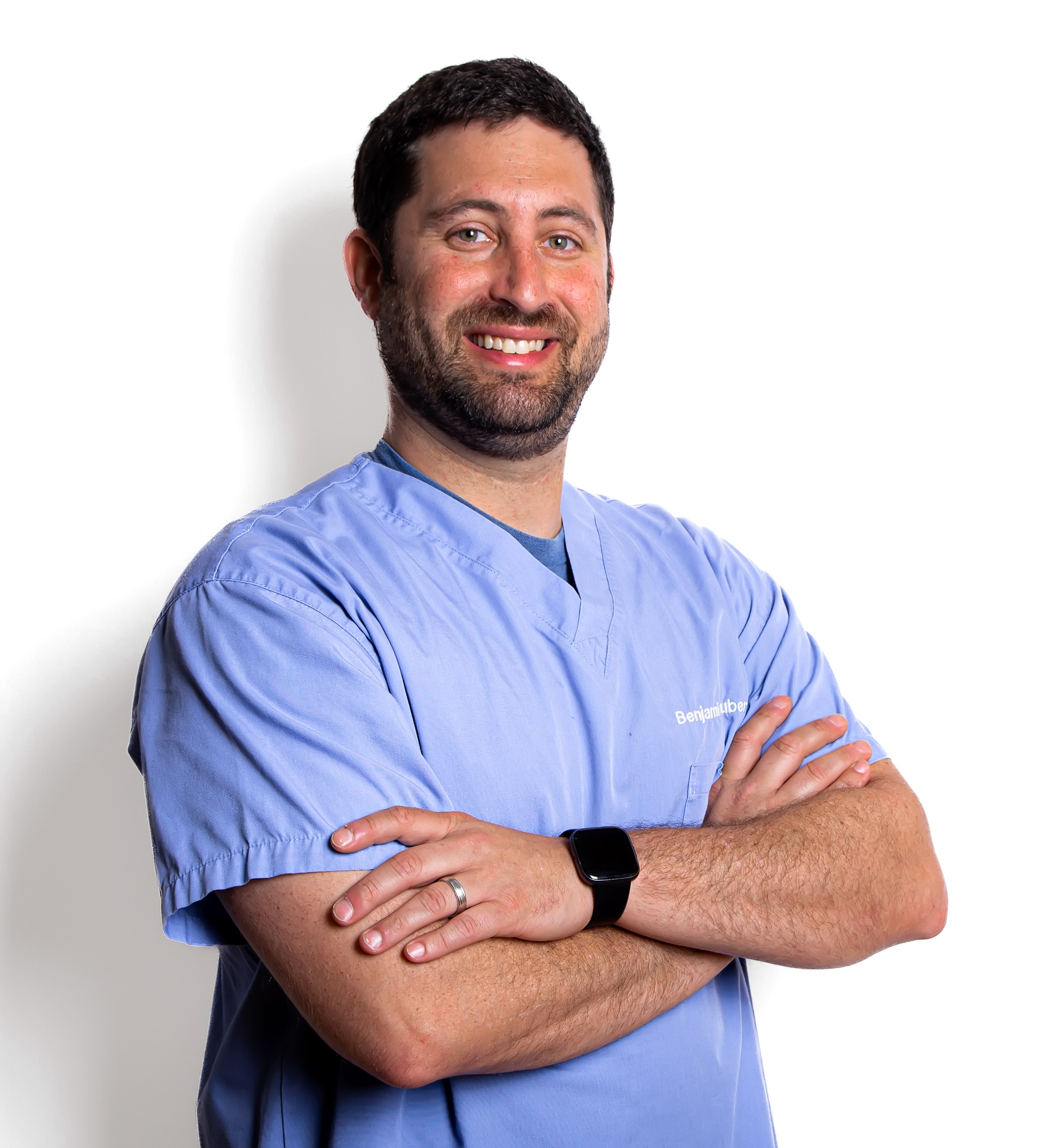
Benjamin J. Gubernick, DDS
Dr. Gubernick completed a General Practice Residency at the Malcolm Randall VA Medical Center, receiving advanced postdoctoral training in restorative, surgical, and comprehensive dental care.
Dental implant consultations in Tampa.
Flex Dental welcomes new patients who are missing one or more teeth and want to compare dental implants, bridges, dentures, and other restorative options.
310 South Dale Mabry Highway, Suite 120
Tampa, FL 33609
(813) 999-1092
English, Spanish, and Portuguese
Questions about replacing missing teeth?
These answers provide general education. A clinical examination, appropriate imaging, and medical-history review are needed to determine whether implant treatment is appropriate.
What is a dental implant?
A dental implant is an artificial tooth-root component placed into the jawbone to support a replacement tooth or prosthesis. The complete restoration may include the implant, an abutment, and a crown, bridge, or implant-supported denture.
What are the three main parts of a dental implant restoration?
A common single-tooth implant restoration includes the implant positioned in bone, an abutment that connects to the implant, and a custom crown that forms the visible replacement tooth. Designs differ for bridges and implant-supported dentures.
Am I too old for dental implants?
Age alone does not determine candidacy. General health, ability to heal, bone support, gum health, medical conditions, medications, nicotine use, oral hygiene, and treatment goals are generally more important considerations.
Can dental implants replace more than one missing tooth?
Yes. Implants may support an individual crown, an implant-supported bridge, or selected removable or fixed prostheses that replace several or all missing teeth. The number and position of implants depend on anatomy, bite, restorative design, and other clinical factors.
How does a dental implant bond with the jawbone?
During osseointegration, bone heals around the implant surface and helps stabilize it. The process takes time and may require several months, although treatment timelines vary.
How long does the dental implant process take?
Timing varies based on extraction needs, infection, bone grafting, implant stability, healing, medical factors, the implant site, and the final restoration. Some patients receive a temporary tooth during treatment, while others must allow the area to heal before it is restored.
Do I need a bone graft before getting an implant?
Not every patient needs grafting. A bone graft or another augmentation procedure may be recommended when the planned site lacks sufficient bone volume or contour for the intended implant position.
Can I get an implant immediately after a tooth extraction?
Immediate implant placement is possible in selected cases, but it is not appropriate for every extraction site. Infection, bone condition, gum tissue, implant stability, anatomy, and the restorative plan influence timing.
Are dental implants painful?
Local anesthetic is commonly used during implant surgery. Postoperative soreness, swelling, or tenderness may occur and varies by procedure. The dental team will discuss comfort options, medications, and postoperative instructions for the planned treatment.
Can smokers or nicotine users receive dental implants?
Tobacco and nicotine use can negatively affect oral health and healing and may increase implant-related risks. Use should be discussed honestly during the consultation so the dentist can evaluate risk and provide recommendations.
Can people with diabetes receive dental implants?
Diabetes does not automatically exclude implant treatment, but disease control, healing, gum health, medications, and other medical factors require careful evaluation. Medical consultation may be recommended before surgery.
Can dental implants get cavities?
The implant and artificial restoration cannot develop tooth decay. However, plaque can inflame the surrounding gum tissue, and peri-implant disease can damage the bone supporting the implant. Daily cleaning and professional monitoring remain essential.
How do I clean around a dental implant?
Cleaning methods depend on the restoration. Your routine may include brushing, floss, interdental brushes, water irrigation, floss threaders, or specialized tools. Flex Dental will show you how to clean around your specific implant restoration.
How long do dental implants last?
There is no guaranteed lifespan. Implant health depends on tissue health, plaque control, smoking or nicotine exposure, medical factors, bite forces, grinding, implant position, restoration design, complications, and regular professional care. The crown or prosthetic components may require repair or replacement even when the implant remains integrated.
Is an implant always better than saving a natural tooth?
No. Preserving a healthy or predictably treatable natural tooth is generally preferred when possible. Implant treatment is used to replace teeth that are already missing or cannot be predictably retained. Patients should review tooth-saving options, extraction, risks, benefits, and alternatives before treatment.
What alternatives are there to dental implants?
Alternatives may include a tooth-supported fixed bridge, a removable partial denture, a complete denture, an implant-supported denture, maintaining a space in selected situations, or attempting to preserve the natural tooth when appropriate.
How much do dental implants cost in Tampa?
Cost varies based on the number of missing teeth, implants, extractions, bone grafting, imaging, abutments, temporary restorations, final prosthesis, materials, insurance benefits, and treatment complexity. Flex Dental can provide a personalized estimate after completing an evaluation.
Patient education references
These independent resources provide general educational information and do not replace an examination, diagnosis, medical review, imaging, or individualized treatment recommendation.
- American Dental Association: Dental Implants ↗
- American Academy of Periodontology: Implant Procedures ↗
- American Academy of Periodontology: Single-Tooth Implants ↗
- American Academy of Periodontology: Peri-Implant Diseases ↗
- American Dental Association: Oral Health Recommendations ↗
- American Dental Association: Smoking and Oral Health ↗

Find out whether dental implants are right for your smile.
Meet with Dr. Benjamin J. Gubernick to compare dental implants, bridges, dentures, tooth-preserving treatment, and other restorative options based on your health and goals.